Explore the pros and cons of resin bound driveways. Discover long-term value, durability, permeability, and repair options to choose the best surface for your property.
Cost and Value Over Time
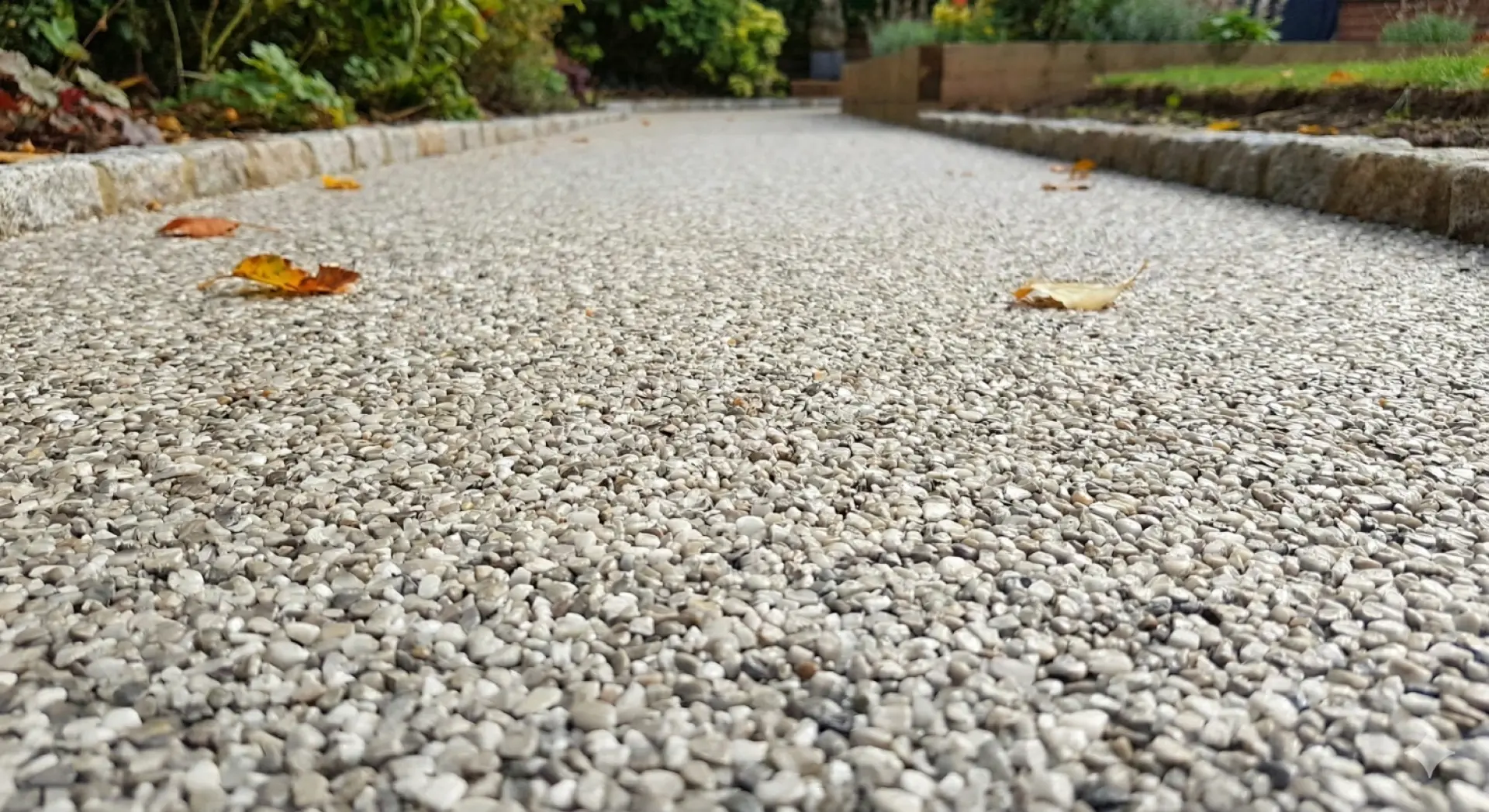
One of the biggest pros of resin-bound driveways is their long-term value. A well-laid resin-bound driveway can last for years when it has a strong base, and because it's hard-wearing, you may spend less money on patch repairs compared to loose gravel or surfaces that crack easily. Many resin-bound surfaces are also porous, which means that rainwater can drain through.
Resin-bound surfaces are also easy to clean, and weeds are less likely to grow through when the base and edges are installed properly. If you choose UV-stable resin, the colour is more likely to stay the same over time, which helps the driveway look good for longer.
However, the main con of resin-bound driveways is the upfront cost. Resin-bound driveways often cost more than basic tarmac or plain concrete to install, especially if groundworks are needed. If your existing base is weak or damaged, you may need a new sub-base or a new tarmac layer installed first, which can add to the total price. Decorative borders, patterns, and premium aggregates can also raise the price, too.
Permeability and Drainage
Resin-bound driveways are often chosen because they are permeable. This means that rainwater can drain through the surface instead of pooling on the top.
When a resin-bound surface is laid as a permeable system, water passes through the small gaps between the stones and into the layers below. This helps reduce standing water after heavy rain, and it can also lower the risk of ice forming during cold weather.

However, a resin-bound driveway is only truly permeable if the whole system is built that way. If it's laid over non-porous concrete or tarmac without a suitable design, the water may not drain properly.
In some cases, the resin can trap water and cause puddles, damp, or water damage over time.
Dirt, leaves, and fine particles can also build up and block the gaps between the stones. When this happens, the drainage becomes slower, and water may start to sit on the surface.
Regular sweeping can help prevent this, and some driveways may need to be washed in order to keep the pores clear.
Durability and Lifespan
Resin-bound surfaces are made from stones mixed with resin to form a solid layer once it cures. This creates a surface that doesn't scatter around like loose gravel or form deep ruts like some softer materials. When it's used normally, a well-laid resin-bound driveway can stay in good condition for many years, especially when it has good edging and a stable sub-base.
Another advantage is that the surface can cope well with regular weather changes. Resin-bound surfaces tend to be flexible enough to handle small temperature shifts without cracking as quickly as other rigid surfaces. Many resin-bound surfaces are also permeable, which means that water drains through the material instead of sitting on the top. This can reduce standing water and lower the risk of frost damage during winter.
However, if the base is weak, cracked, or moving, problems can start to show through the resin layer. Cracks from old concrete or worn-out tarmac can become visible, and areas that are prone to sinking can create dips in the surface. This is why some driveways need to have a new base installed, even if an overlay looks cheaper.
Repairs and Patch Matching
Even though many resin-bound surfaces are hard-wearing, damage can still occur due to movement in the base, heavy loads, spills, or a poor installation. One clear advantage is that small repairs can be done without needing to replace the whole area.
If you get a crack, a worn-out spot, or a small area of loose stones, an installer can sometimes cut out the damaged section and re-lay the resin-bound material in that area. This can often be quicker and less disruptive than breaking and re-laying a large slab of concrete or a full section of block paving just to repair the resin.

The main downside is patch matching. Resin-bound surfacing is made from natural stone, and the colour of the stone can vary between batches.
Even if you choose the same colour name, a new batch may look slightly different. Sunlight and weather can also change the colour of the existing driveway over time, especially if the resin isn't UV-stable. This means that the repaired resin can stand out, even when the job's done well.
To reduce any repair and matching problems, you should keep a record of the aggregate blend and resin type that's been used. Additionally, choosing to have UV-stable resin installed can also help you keep the colour more consistent over time.
Overall, resin-bound driveways can be repaired, but making the new resin match perfectly might not always be possible.
Paving Contractors Worthing provides resin-bound surfacing services for driveways, paths, and patios acrossWorthing. We can create smooth, strong finishes in a range of colours and stone mixes.