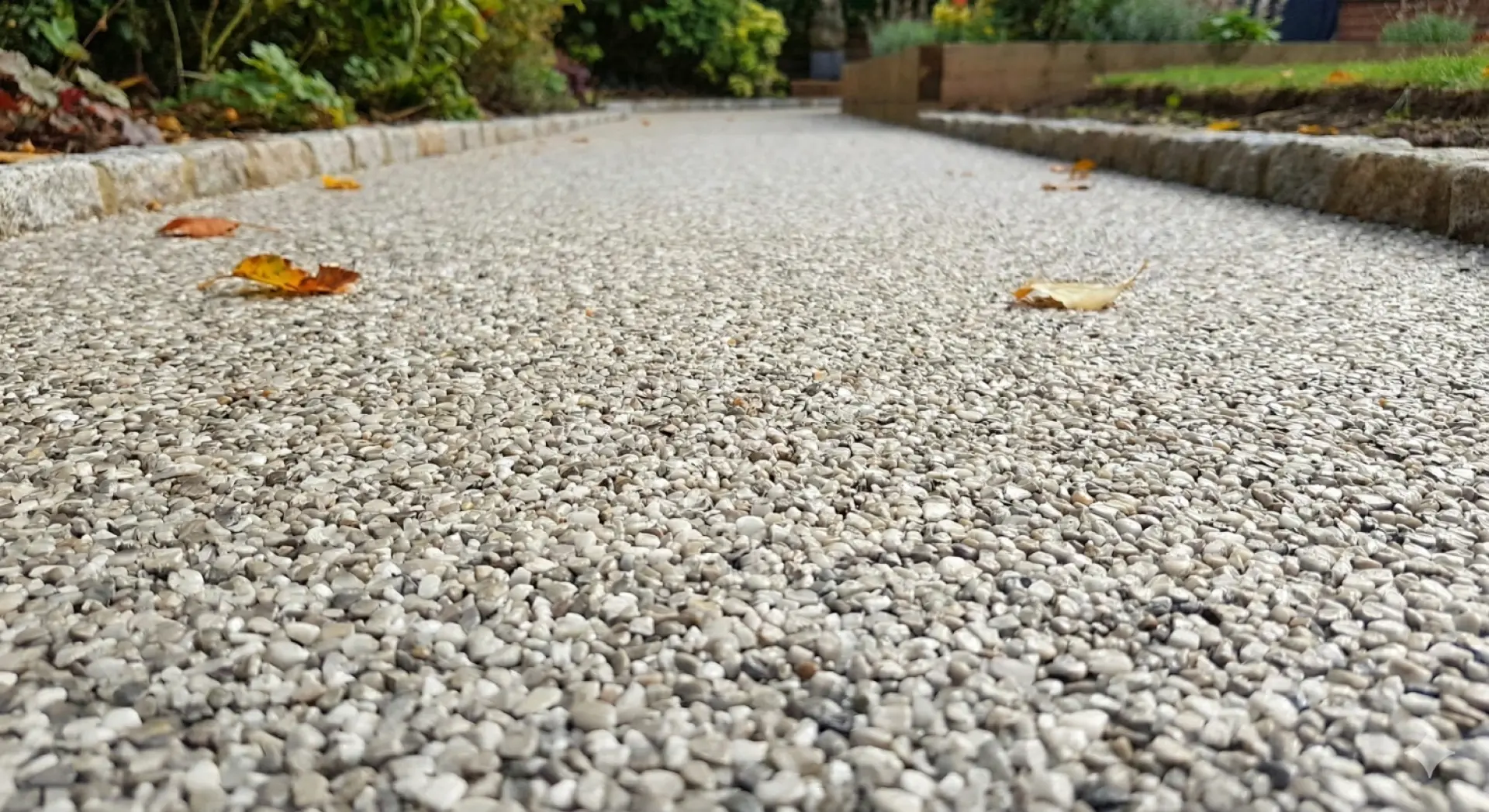
How much does resin bound surfacing cost in the UK? Find out more about the factors which affect the price of resin bound driveways.
Average Cost of Resin Bound Surfacing in the UK
Resin-bound surfacing is a smooth mixture of stones and clear resin that's often used for driveways, paths, and patios. In the UK, most homeowners pay somewhere between £70 and £120 per square metre for a full resin supply and installation job. On average, the price will generally be lower for simple, large areas and higher for small or awkward spaces.
You can generally expect to pay around £120 per square metre for a typical driveway, which would make a 50 m² area cost about £6,000 to do. A smaller 20 m² driveway can cost roughly £2,800 to do, while a 100 m² driveway can be about £10,000; this is mainly because the cost per square metre will drop on bigger jobs.
But what makes the price change so much? Firstly, the base underneath matters. Resin-bound surfacing needs a strong, even base, such as existing tarmac or concrete. So if the old surface underneath is cracked, soft, or sloping, you may need extra groundworks done, which can add to the final price. Secondly, the materials you choose can affect the cost. UV-stable resin usually costs more, but it helps the surface retain its colour. Fancy aggregates, blends, borders, and patterns can also push the price up.
What Affects the Price Most
The price of resin-bound surfacing can vary a lot, and the biggest changes in price generally come from the base materials, the amount of groundwork that's needed, and the size and shape of the area.

The base underneath matters the most since resin-bound surfacing needs a strong, stable surface, like tarmac or concrete. If the current surface is cracked, sinking, or uneven, it may need to be repaired or replaced before any resin can be put down.
If there is no suitable base at all, the installer may need to dig out the area, add sub-base layers, and lay new tarmac or concrete down before adding the resin. This extra work can add a large amount of money to the total price because more materials and labour are needed.
The shape of the site and how easy it is to access can also make a big difference regarding the overall price. A simple rectangular space is easier to lay out than a space with lots of corners, curves, steps, or tight gaps. Poor site access can also raise the price if the materials need to be carried by hand, or if a skip and mixing area are hard to place.
Colour and Aggregate Choices and Their Impact on Cost
Colour and aggregate choices can also change the price of resin-bound surfacing more than people expect. This is because different stones cost different amounts, and some colours need special blends, and certain finishes can take longer to lay.
The aggregate is the main part of a resin-bound surface. Basic aggregates that are widely available, such as common golden or mixed natural stones, are often cheaper, whereas more unusual options, such as bright white, deep red or rich black stones, can cost more to lay because they're harder to source.
Some aggregates also need more care during the installation process. Lighter stones will show dirt marks more easily, so installers may spend extra time protecting the area and keeping the finish clean. On the other hand, very dark stones can show scratches or scuffs in strong light.
If you choose a blend of two or three stones to create a custom colour, this can also raise the price because the mixture must be measured and matched, and extra materials may be needed to avoid colour changes between batches.
New Surface vs Overlay: Which Costs Less?
One of the biggest choices regarding resin-bound surfacing is whether you need a brand new base or whether the resin can be laid as an overlay. In most cases, an overlay resin job can cost less, but only if the current base is in good condition.
An overlay means the installer will lay a resin-bound surface on top of an existing base (usually tarmac or concrete), and because there's less groundwork to do, the labour time is cut in half. However, you may still need cleaning, priming, and small repairs done, but these services are usually cheaper than building the base from scratch.
However, an overlay isn't always the cheaper option in the long run if the base is poor or weak. If the existing surface is cracked, sinking, badly patched, or has drainage problems, laying resin over it can lead to issues, such as cracks or areas becoming uneven.
If this happens, you may end up paying twice as much for the repairs. A good installer will check the base beforehand and suggest making a new base if there's any doubt.
A new surface resin job usually means that the old driveway or path needs to be removed, and a new base needs to be built before the resin can be laid down.
This costs more because it involves several extra stages, such as breaking up and disposing of the old surface, digging the base to the right depth, adding a strong sub-base, compacting it, and then laying down new tarmac or concrete. Each stage uses more materials and takes more time to complete, which will generally add to the overall price.
Paving Contractors Worthing provides resin-bound surfacing services for driveways, paths, and patios across Worthing. We can create smooth, strong finishes in a range of colours and stone mixes.